Skip to content
What Is Hydrogenated Polydecene?
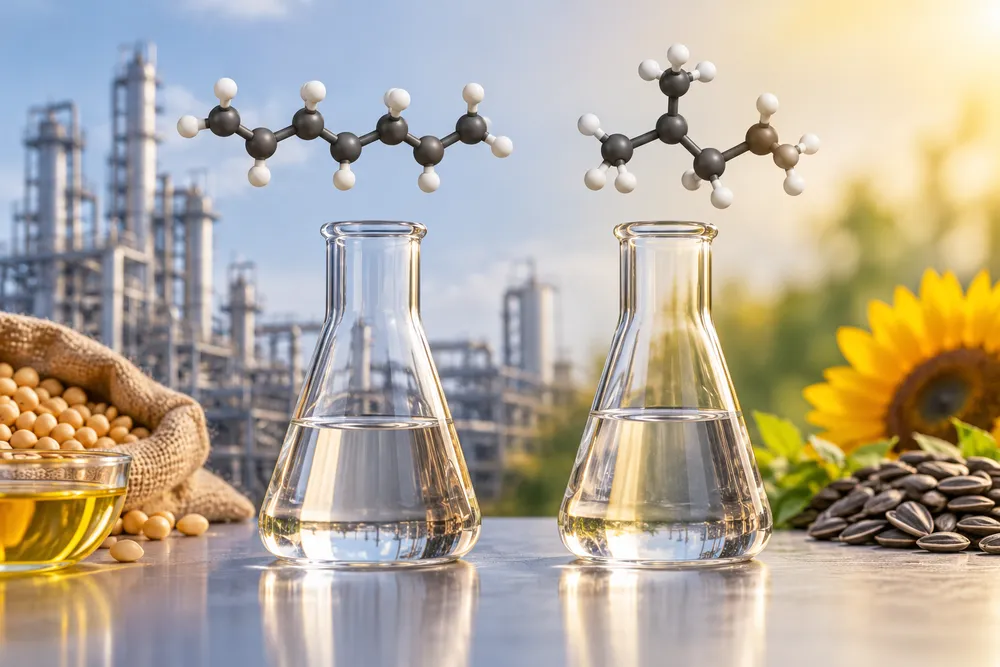
Hydrogenated polydecene (CAS 68037-01-4) is a synthetic hydrocarbon produced by oligomerization of 1-decene followed by full hydrogenation of the double bonds. The result is a colorless, odorless, transparent viscous liquid that is chemically inert, extremely pure and remarkably pleasant on skin — a combination that has made it a premium emollient across global cosmetics formulation, and a high-performance synthetic base oil for industrial uses.
Production and Why It Matters for Purity
1-Decene is oligomerized (typically to trimers, tetramers and pentamers) and then hydrogenated to saturation. Because the feedstock is a single alpha-olefin rather than a natural-oil or petroleum cut, the finished product carries essentially no aromatics, sulfur, nitrogen or color bodies. This is the structural reason hydrogenated polydecene can meet cosmetic-grade purity that mineral oils and natural esters must work hard to approach — and why batch-to-batch consistency is exceptional.
Key Properties
- Colorless, odorless, transparent liquid; non-greasy, silky skin feel with low tack.
- Chemically inert and oxidation-stable: no unsaturation to go rancid, long shelf life without antioxidants.
- Excellent spreadability and film-forming; waterproof yet breathable on skin.
- Emollient and moisturizing; boosts SPF performance of sunscreen systems.
- Low-temperature fluidity and high viscosity index in its industrial grades.
Applications in Cosmetics and Personal Care
Skin Care
Hydrogenated polydecene is used as an emollient and sensory modifier in creams, lotions and serums. It gives a silky, slightly cushioned slip, reduces the greasiness of heavier oils, and forms a light breathable film that supports moisturization. Its inertness suits sensitive-skin lines.
Sun Care
A well-documented benefit: hydrogenated polydecene boosts the SPF value of sunscreen formulations, improving the dispersion efficiency of UV filters while contributing water resistance. For natural and clean-label sun products it is a go-to alternative to silicones.
Makeup and Hair Care
In color cosmetics it improves pigment wetting and payoff with a non-sticky finish; in hair care it adds shine, detangling slip and heat-protection film without weighing hair down. It is also a common carrier for active ingredients.
Alternatives Perspective
Formulators often position hydrogenated polydecene against dimethicone and against hydrogenated polyisobutene: versus silicone it offers plant-positioning-friendly labeling and similar slip; versus squalane it is more cost-stable at scale. Blends of the three are common in premium textures.
Industrial Applications
The same saturated-oligomer chemistry makes hydrogenated polydecene a valued synthetic base oil: low-temperature lubricants, cable and capacitor oils, adhesives, textile auxiliaries and rubber processing oils where color, odor and oxidation stability cannot tolerate refined mineral stocks.
Oligomer Grades and Viscosity Classes
Hydrogenated polydecene is characterized by its oligomer distribution — the balance of trimer (C30), tetramer (C40) and pentamer (C50) species — which sets viscosity and skin-feel. Low-viscosity grades (around 2–5 cSt at 40 ℃) feel light and fast-spreading, suiting serums and sunscreens; mid-viscosity grades deliver the cushioning slip associated with premium creams; high-viscosity grades function as gloss agents for lip products and as tack reducers in adhesive and sealant systems. Cosmetic formulators select by INCI-identical grade viscosity rather than by chemistry alone.
Formulation Guidance for Cosmetics
- Use levels: typically 1–10% in skin care, up to 30% and beyond in lip gloss and cleansing-oil systems where gloss and slip dominate.
- Cold processable: being a liquid at room temperature, it incorporates into the oil phase without heating — an energy and throughput advantage for large batches.
- Sun care: combine with UV filters to raise measured SPF; hydrogenated polydecene improves filter dispersion and film uniformity, contributing 10–20% SPF gains in many benchmarks versus standard ester carriers.
- Pigment systems: its wetting behavior helps disperse iron oxides and pearlescents, improving payoff in foundations and sticks.
- Preservative compatibility: inert saturated structure interacts with neither preservatives nor actives, simplifying challenge testing.
Sensory Comparison in Practice
On skin, hydrogenated polydecene sits between dimethicone and squalane: less “silicone-slippery” than dimethicone, drier and lighter than most esters, with a cushioned after-feel. It is frequently used to “naturalize” silicone textures — replacing part of the dimethicone to reduce silicone loading while keeping playtime. In hair care it delivers shine without the greasiness of mineral-oil systems and supports heat-protection claims as a film former.
Industrial Performance Properties
As a synthetic base oil, hydrogenated polydecene offers a high viscosity index, very low pour point (typically below −45 ℃), excellent oxidation and thermal stability, and near-zero volatility in the working range. These properties suit low-temperature lubricants, cable impregnating oils, capacitor fluids, textile and rubber processing oils, and adhesives where color and odor stability through service life are non-negotiable. Fully saturated chemistry means no additive response to antioxidants is needed for most applications — the fluid is its own antioxidant.
Quality Verification and Stability
Key COA parameters for cosmetic grades: appearance (colorless, clear), color (APHA below 30), kinematic viscosity in the grade class, density, pour point, acid value, saponifiable matter and purity by GC (above 99% typical). Because the molecule is saturated, storage stability is outstanding — two years sealed is standard, with no rancidity pathway. UV and oxidation stress tests show essentially no color development, which is why formulators trust it for white-pack and clear-bottle products.
Sourcing Strategy for Formulators
Cosmetic buyers should qualify two elements: INCI documentation and batch consistency of viscosity class. Industrial buyers should align viscosity grade with the equipment’s lubrication spec. EastChem supplies both streams with COA per lot, fresh stock availability, and consolidation with the wider personal-care ingredient family — surfactant-adjacent alcohols like 2-ethylhexanol — so formulation houses can build one purchase order for multiple inputs.
Regulatory and Identification Data
For registration files and INCI labeling, hydrogenated polydecene appears as CAS 68037-01-4, INCI name Hydrogenated Polydecene, with EINECS/ELINCS registration under the polymer provisions. It is not classified as dangerous for transport and carries no hazard pictograms in standard supply. Cosmetic safety dossiers rely on its purity profile — absence of residual monomers above trace levels and full saturation — which documented COA data supports. Buyers integrating the material into EU- or FDA-market products should keep the supplier’s technical dossier with their regulatory file; we provide documentation with each qualification batch.
Sensory and Performance Benchmarks
Formulators evaluate emollients with panel tests: pick-up (first touch), rub-out (spread) and after-feel at timed intervals. Hydrogenated polydecene benchmarks as: light pick-up with immediate slip; medium-fast rub-out with slight cushion; dry, powdery-silk after-feel at 10 minutes. In gloss and payoff tests for lip systems it outperforms mineral oil and castor oil at equal viscosity. For sunscreens, ISO 24443-type in-vitro testing shows consistent SPF gains when it replaces standard ester carriers — the reason it appears in most modern UV formulation toolboxes.
Related Materials and Naming Confusions
Hydrogenated polydecene belongs to a family that buyers frequently cross-shop. Polyalphaolefins (PAO) are structurally similar oligomers optimized for lubricant performance rather than cosmetics. Hydrogenated polyisobutene is the isobutene cousin used in lip and skin products under a different INCI. Neopentyl glycol diheptanoate and C13-15 alkane compete in the same sensory space. The practical takeaway: when a formulation specifies Hydrogenated Polydecene by INCI, substitute materials are not interchangeable in claim language or in regulatory files — order by CAS 68037-01-4 and INCI name together, and audit incoming material against both. This closes the loop between purchasing discipline and the finished-product label.
From Sample to Container
Qualification for hydrogenated polydecene is fast when the supplier documents properly: a 500 ml sample batch with COA, a viscosity confirmation against your specification, a patch test in the target formula, and a first commercial order of drums before moving to IBC volume. Because the product is chemically inert and stable, the technical risk in qualification is low — the real work is commercial: fixing the viscosity class, the documentation set and the replenishment rhythm. EastChem keeps fresh stock of both cosmetic and industrial grades, ships samples within about two days, and supports the drum-to-IBC-to-flexitank progression as your volume grows, with MOQ at one 20-foot container.
Grades, Handling and Supply
Cosmetic grades are supplied with INCI documentation (Hydrogenated Polydecene), typical purity above 99%, colorless (APHA below 30), low pour point. Industrial grades are differentiated by viscosity class. The product is stable and non-hazardous for transport; store sealed in a dry place. Packaging: 170–190 kg steel drums or IBC totes.
Dongying EastChem is a 19-year chemical manufacturer with three subsidiaries, holding fresh stock of hydrogenated polydecene for both cosmetic and industrial buyers. Every batch ships with COA; samples dispatch in about 2 days. Our related surfactant and alcohol lines — for example 2-ethylhexanol and the SLES article family — support complete formulation supply from one partner. MOQ one 20′ container, T/T or L/C.
Frequently Asked Questions
What is hydrogenated polydecene used for in cosmetics?
As an emollient and sensory modifier in skin care, a SPF-boosting component in sunscreens, a pigment-dispersing base in makeup, and a shine and slip agent in hair care.
Is hydrogenated polydecene safe for sensitive skin?
It is non-irritating and chemically inert, which is why it is widely chosen for sensitive-skin and clean-formulation lines. As with any raw material, confirm the cosmetic-grade documentation for your market.
Hydrogenated polydecene vs squalane vs silicone?
It offers silicone-like slip without silicone labeling, and squalane-like skin feel with better large-scale cost stability. Many premium formulas blend it with either.
Why is it so pure compared with mineral oil?
It is synthesized from a single alpha-olefin (1-decene) and fully hydrogenated, so it contains no aromatics, sulfur or nitrogen compounds — no refining needed.
Do you supply industrial grades too?
Yes — viscosity-class industrial grades for lubricants, cable oils, adhesives and rubber processing, alongside cosmetic-grade material with INCI documentation.
What documentation comes with each batch?
COA with purity, color and viscosity; cosmetic-grade lots include INCI documentation. Samples ship within about 2 days.
Contact for quotations and samples:
Billy Lu
WeChat/Phone: +86 182 5464 4858 · WhatsApp: +86 182 5464 4858
Email: [email protected]