Skip to content
What Is SLES?
Sodium Lauryl Polyether Sulfate — better known as sodium laureth sulfate, SLES; CAS 68585-34-2 for the common 2-EO ether sulfate — is a high-performance anionic surfactant prepared from coconut-derived lauryl alcohol. It is supplied mainly as a 70% active, light-yellow viscous paste that dissolves readily in water. Since its commercialization, SLES has been the volume backbone of shampoos, body washes, dish liquids and laundry detergents worldwide, prized for its balance of cost, foam, cleaning power and mildness.
How SLES Is Made
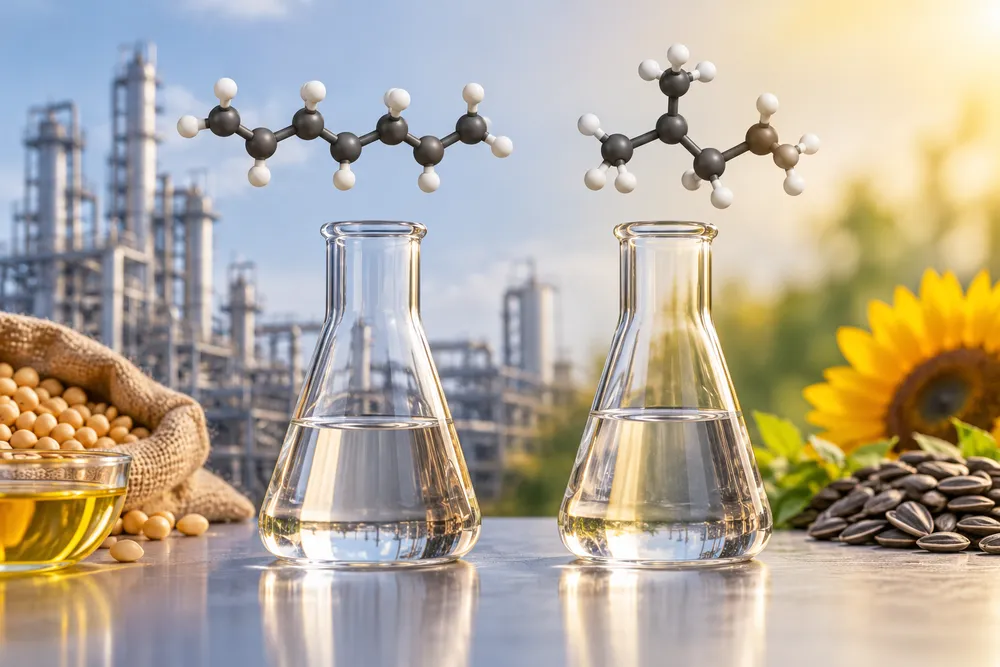
The production chain explains the product. Natural lauryl (C12–14) alcohol from coconut or palm kernel oil is ethoxylated with an average of two ethylene oxide units, extending the molecule with a short polyether segment; the ethoxylate is then sulfated with sulfur trioxide/air and neutralized with sodium hydroxide to the final sodium ether sulfate. Each step leaves a fingerprint a good COA controls: unethoxylated alcohol sulfate (harsher), unsulfated matter (foam loss), sodium sulfate (filler effect), and color bodies (shelf-life of finished products).
Molecular Structure and Performance
The two-unit ethoxylate bridge between the C12 chain and the sulfate head is what distinguishes SLES from sodium lauryl sulfate (SLS). That bridge softens the molecule: better water solubility in hard water, larger and creamier foam, lower skin irritation at equal active level, and excellent compatibility with amphoteric and nonionic co-surfactants. Performance highlights that matter to formulators:
- Cleaning and emulsifying: strong oil removal and emulsification in dilute systems.
- Foaming: abundant, stable foam even in hard water and in the presence of sebum.
- Thickening response: adding just 2%–5% sodium chloride raises viscosity efficiently — the classic salt curve that lets formulators hit target textures without polymers.
- Hard-water tolerance: the ether segment keeps it functional where soaps and SLS falter.
- Biodegradability: readily biodegradable under OECD screening conditions, accepted in mainstream eco-label programs.
One formulation caution stands: SLES retains a degree of irritation in cosmetics, and products for sensitive or dry skin moderate the level or buffer it with amphoteric co-surfactants such as betaines — see our betaine product introduction for the pairing logic.
Applications by Segment
Home Care: Liquid Laundry, Dishwashing, All-Purpose
In liquid laundry detergents SLES provides the primary surfactancy for anionic-active formulas, often blended with LAS and nonionics; in hand dishwashing liquid it is the foam engine consumers judge by the sponge test; in all-purpose cleaners it couples cleaning with ease of rinsing. Salt-thickening economics make SLES pastes the natural concentrate for contract manufacturers.
Personal Care: Shampoo, Body Wash, Hand Soap
The classic pairing of SLES with cocamidopropyl betaine and conditioning additives defines mass-market shampoo and body-wash architecture. Dosages of 8–15% active deliver lather, viscosity response and rinsability; mildness is engineered by ratio and additives rather than by abandoning SLES economics.
Industrial and Institutional Cleaning
Vehicle washes, floor cleaners, degreasers and food-plant sanitation products use SLES for its wetting, emulsification and low-residue rinsing in hard water.
Textile, Leather, Paper and Metalworking
As a wetting and detergent auxiliary, SLES appears in textile scouring, leather degreasing, paper felt cleaning and metalworking-cleaning concentrates, wherever fast wetting plus detergency is required without solvent odor.
Petroleum and Agricultural Formulation
In oilfield workover and cleanup fluids SLES serves as foaming and wetting agent; in agrochemistry it can act as a tank-mix wetting enhancer and as an emulsifier component for emulsion concentrates.
Formulation Guidance
Dilute SLES paste with warm (30–40 ℃) deionized or soft water under gentle agitation to avoid entrained air; allow the paste to fully dissolve before adding other ingredients. Keep finished-product pH between 6 and 8.5: strong acid hydrolyzes the sulfate ester back to alcohol over time, and very high pH accelerates color development. Salt should always be the last variable added, creeping up the salt curve in small increments — overshooting viscosity with salt is not easily reversed. Preservative systems standard for water-based surfactant products apply.
Quality Parameters on a Useful COA
Active matter (70% +/- 1%), unsulfated matter (below 2%), sodium sulfate (below 1.5%), pH of 1% solution, color (Klett or Gardner), water content and microbacterial counts for personal-care grade. EastChem certifies these per lot, in 110 kg or 220 kg plastic drums or IBC totes.
Handling and Storage
SLES 70% is stable, non-flammable and low-hazard, but viscous and temperature-sensitive: store between 5 and 35 ℃. Freezing separates and gels the paste; sustained heat darkens color. Keep containers closed, and use first-in-first-out within 12 months. Consult the SDS — routine chemical handling with eye protection suffices.
Building Products Around SLES: Architecture Examples
A mass-market shampoo typically opens with 12–18% active SLES as the wash engine, adds 2–4% cocamidopropyl betaine for mildness and foam creaminess, a conditioning agent (polyquat or silicone emulsion for two-in-one types), pearlizing or opacifying aids, preservative, fragrance, and finally salt to the target viscosity — often 6,000–12,000 mPa·s for a standard bottle. A dishwashing liquid starts similarly but pushes actives to 15–25% with emphasis on grease-cutting hydrotropes, and viscosity targets lower for pumpability. A body wash differs mainly in fragrance load and skin-feel additives. In all three, SLES’s salt curve is the viscosity dial and its hard-water tolerance is the stability backbone — which is why reformulations away from SLES, attempted in some marketing-driven lines, usually return to it on cost-performance.
Raw Material Chain and Market Position
SLES economics trace upstream to lauryl alcohol (from coconut and palm kernel oil), ethylene oxide and sulfur. Oleochemical cycles therefore move SLES pricing with tropical-oil harvests, while sulfation capacity balances regional supply. China hosts a substantial share of world sulfation capacity, and export grades from integrated oleochemical complexes ship globally in drums, totes and flexitanks. Buyers distinguish suppliers by the three COA figures that matter in the field — active matter consistency, unsulfated matter control and color stability through shipping — rather than by nominal origin claims.
Analytical Practice: Verifying What You Bought
Active matter of anionic surfactants is classically verified by two-phase (Hyamine) titration or by quick instrumental methods correlating to it; unsulfated matter and sodium sulfate complete the purity picture; pH and color track handling history. Incoming-goods labs run these in under an hour per sample. The practical tip: titrate against a standard SLES lot, not just a reagent blank, because endpoint sharpness varies with formulation-relevant impurities — and insist your supplier’s COA numbers are method-annotated so your lab and theirs speak the same language.
Cold-Chain Shipping and Tropical Handling
SLES paste crossing temperature zones needs simple but real care: winter routing through freezing ports risks gel separation (re-warming under gentle agitation can restore usable paste, but color and viscosity may drift), and summer container days above 45 ℃ accelerate darkening. Export packaging in full, headspace-minimized drums; short port dwell; and pre-agreed warehousing at destination keep quality where the COA certified it. EastChem plans routings with these constraints as standard — a detail that separates batches that arrive workshop-ready from batches that arrive as projects.
Why Source SLES from Dongying EastChem
We are a 19-year chemical manufacturer with three subsidiaries supplying SLES 70% with consistent color and active matter, batch COA included. The adjacent portfolio supports complete formulation supply: surfactant-chain alcohols like 2-ethylhexanol, glycols for the water phase, and the companion article on our site covering premium SLES performance. MOQ one 20-foot container, samples in about 2 days, T/T or L/C payment.
About this guide: formulation guidance and quality parameters here reflect standard industry practice for SLES 70% and the supply specifications EastChem certifies. Full formulation development remains the formulator’s responsibility under local regulations. Formulation architecture, analytical practice and market commentary are maintained with our technical team and updated as methods and supply patterns evolve. Manufacturers evaluating SLES programs can request active-matter consistency records, color-stability data through shipping routes, and the paired supply of betaine and formulation alcohols from one source. For contract manufacturers building detergent and personal-care programs on SLES, the fastest route to a stable formula is a documented salt-curve study on the delivered lot — a service our laboratory runs for volume customers — together with the stability protocol notes that keep viscosity and color on specification from production line to retail shelf in tropical and cold climates alike. Lot-matched retention samples are available for laboratory cross-checks on arrival, and the certificate of analysis references the same lot numbering for traceability. Volume contracts add quarterly salt-curve summaries so viscosity targets stay validated across the year.
Frequently Asked Questions
What is the typical active content of SLES?
Most commercial material is 70% active matter as a viscous paste — the standard sulfate form being the 2-EO ether sulfate.
How do I thicken an SLES formula?
Add 2%–5% sodium chloride and creep up the salt curve in small steps; SLES systems thicken efficiently with salt alone.
SLES vs SLS — which should I use?
SLES (with its short ethoxylate bridge) foams creamier, tolerates hard water better and irritates less; SLS is stronger-degreasing and cheaper per active but harsher. Most personal-care systems choose SLES.
Is SLES suitable for sensitive skin?
With moderation: levels are typically reduced and paired with amphoteric betaines for sensitive-skin lines, because long-term use on dry or sensitive skin can irritate.
How should SLES paste be stored?
Between 5 and 35 ℃, sealed. Freezing causes separation and gel lumps; sustained heat darkens color. Use within 12 months.
Which industries beyond home and personal care use SLES?
Industrial cleaning, textile scouring, leather degreasing, paper felts, metalworking cleaners, oilfield foaming agents and agrochemical wetting-enhancer formulations.
Contact for quotations and samples:
Fiona Wang
WeChat/Phone: +86 183 5460 9228 · WhatsApp: +86 183 5460 9228
Email: [email protected]